Haseeb Sarwar has done BS (hons) Economics from Government College University Lahore. He has previously qualified Planning Officer, AD Industries, District Population Officer, Tehsildar BPSC
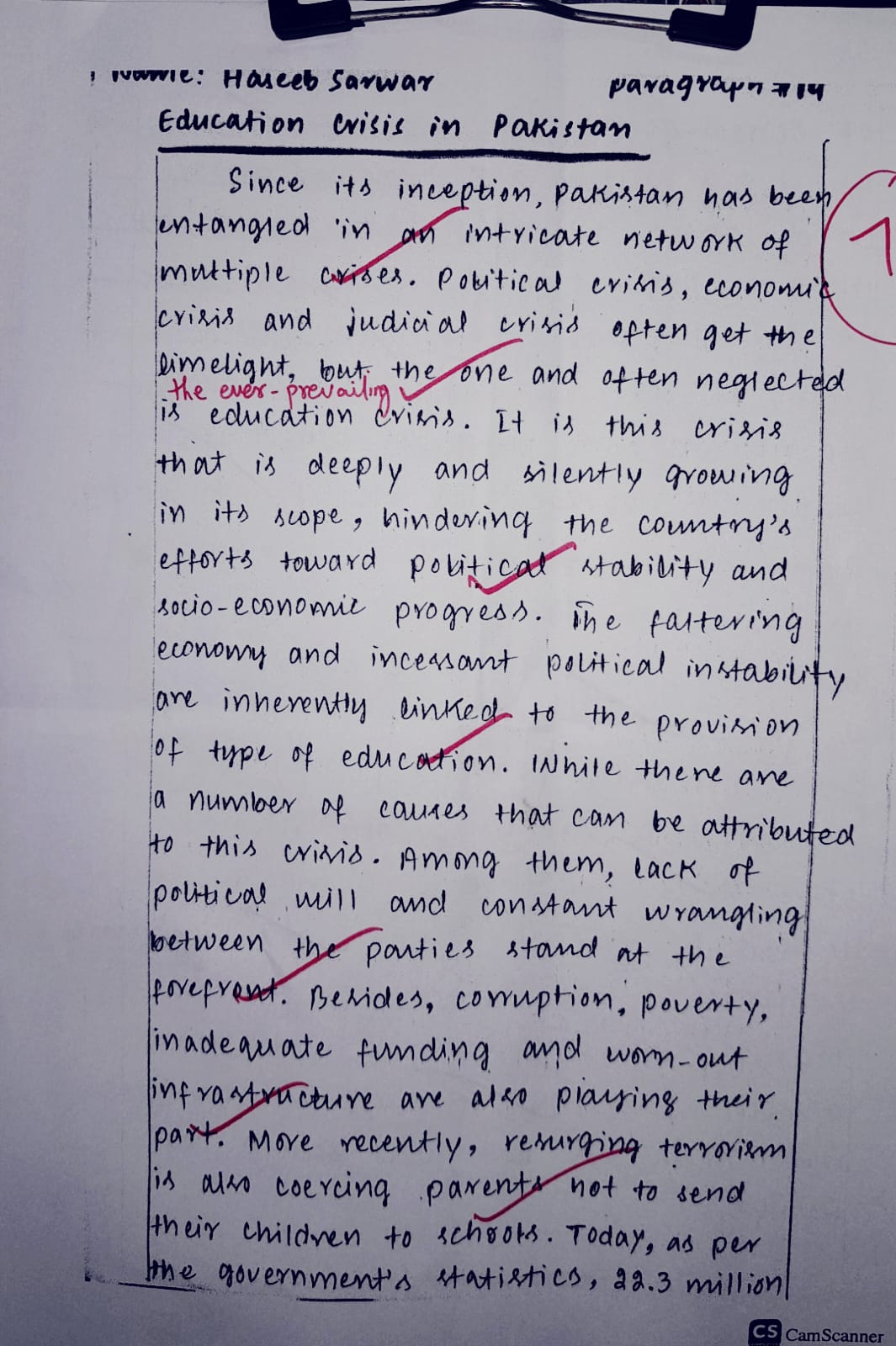
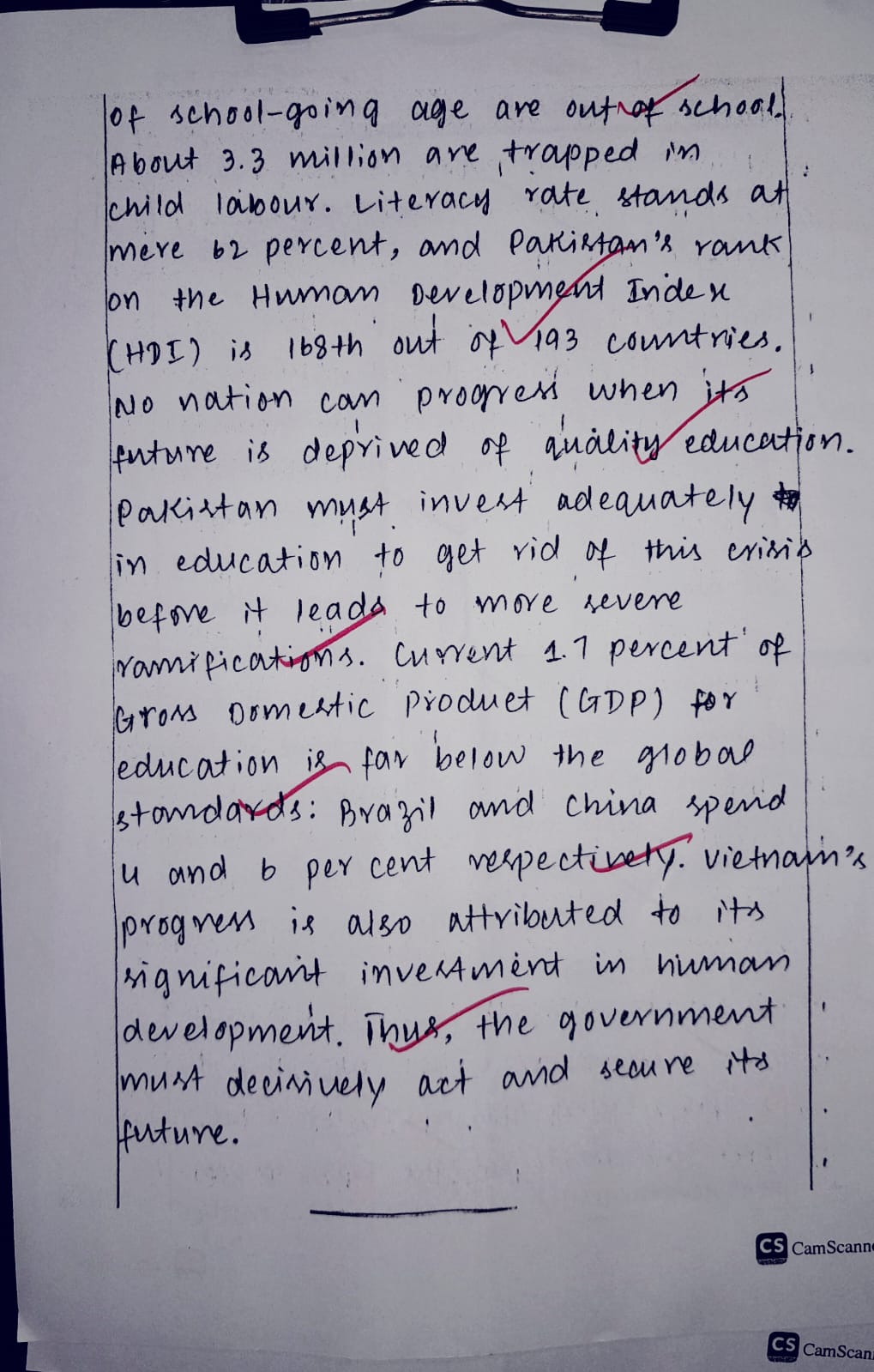
Since its inception, Pakistan has been entangled in an intricate network of multiple crises. Political crisis, economic crisis and judicial crisis often get the limelight, but the one and often neglected is education crisis. It is this crisis that is deeply and silently growing in its scope, hindering the country’s efforts toward political stability and socio-economic progress. The faltering economy and incessant political instability are inherently linked to the provision of type of education. While there are a number of causes that can be attributed to this crisis. Among them, lack of political will and constant wrangling between the parties stand at the forefront. Besides, corruption, poverty, inadequate funding and worn-out infrastructure are also playing their part. More recently, resurging terrorism is also coercing parents not to send their children to schools. Today, as per the government’s statistics, 22.3 million of school-going age are out of school. About 3.3 million are trapped in child labor. Literacy rate stands at mere 62 percent, and Pakistan’s rank on the Human Development Index (HDI) is 168th out of 193 countries. No nation can progress when its future is deprived of quality education. Pakistan must invest adequately in education to get rid of this crisis before it leads to more severe ramifications. Current 1.7 percent of Gross Domestic Product (GDP) for education is far below the global standards. Brazil and China spend 4 and 6 per cent respectively. Vietnam’s progress is also attributed to its significant investment in human development. Thus, the government must decisively act and secure its future.